Est. 2024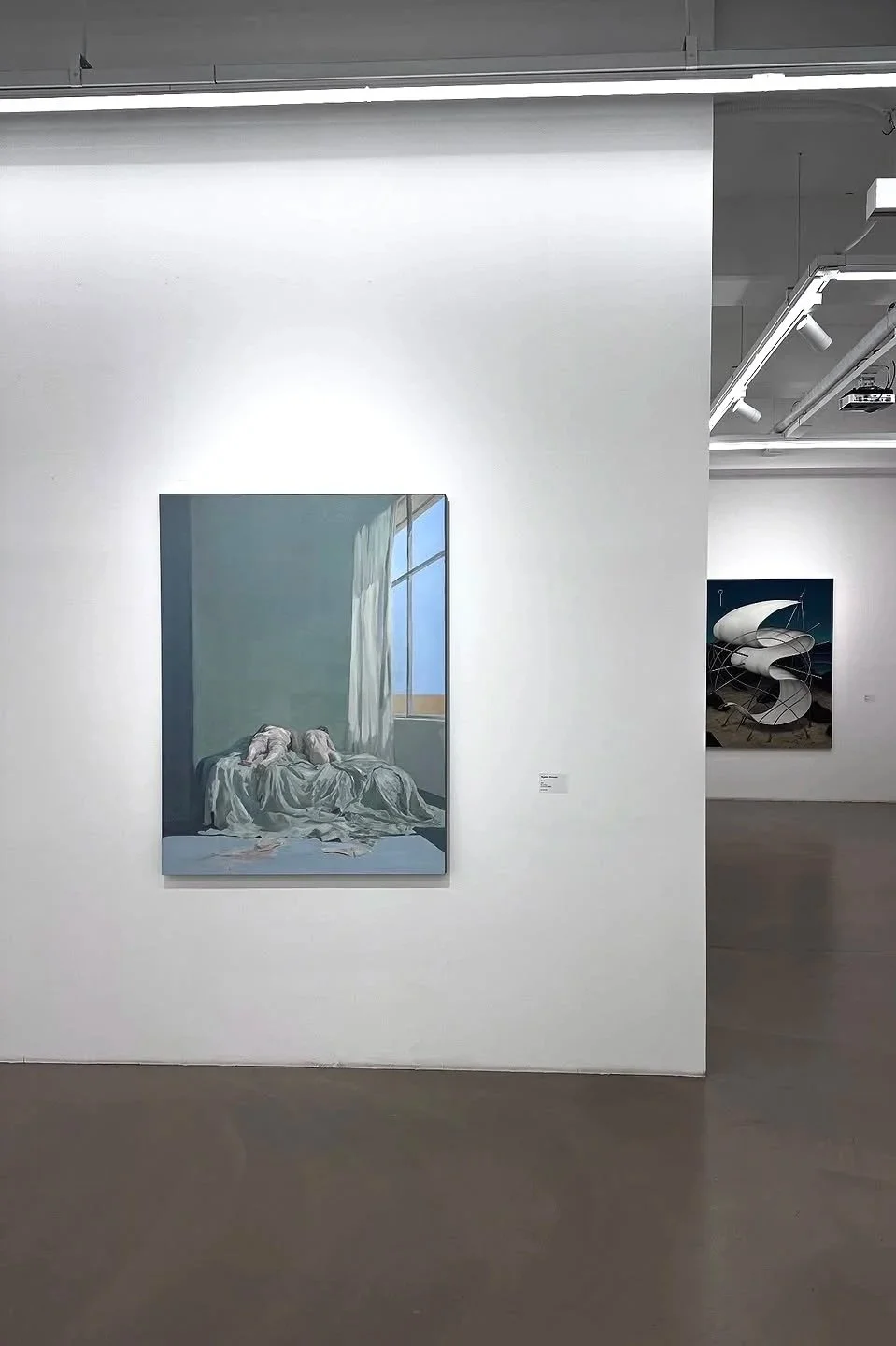
Visualizing the disintegration of the self.
〰️
Amid the fragments of memory, matter, and meaning, I give it form.
〰️
Visualizing the disintegration of the self. 〰️ Amid the fragments of memory, matter, and meaning, I give it form. 〰️
Installation View — 2025 ACF / Paradise City, Paradise City Plaza, Incheon · Organized by ART CHOSUN & TV CHOSUN · Supported by Paradise Group / Hana Choi
“Artist Statement”
The Surrealism I pursue is a means of bringing together the conscious and unconscious realms of experience. Within a state of “absolute reality,” or the Surreal, the world of dreams and fantasies can collide with or overlap the rational world of everyday life. I believe that it is precisely at the moment when this boundary begins to destabilize that our most truthful sensations emerge. This perspective is also connected to an attitude rooted in the theories of Sigmund Freud, through which the unconscious is understood as a source of imagination. Human thought and emotion are so complex that we often struggle to fully comprehend our own minds. Particularly in moments filled with stress and psychological anxiety, even understanding what we feel can become difficult. For me, the unconscious is not simply a space in which images are produced; it is also a layer in which wounds, anxieties, and traces of past experiences that resist verbal articulation remain submerged. For this reason, art is, to me, a process through which records of the self become condensed within visual images. Through creation, I bring movements occurring within me to the surface, translate the language of confusion into images, and examine emotional structures that had previously remained invisible. My work does not romanticize wounds or attempt to resolve them into a single conclusion. Rather, it records sensations that remain as growing pains and becomes a process of restoration through which I attempt to move beyond them.In the past, my search for a way to truly love life naturally led me toward philosophy. Philosophy, as I understand it, is less about pursuing grand concepts or definitive answers than about maintaining an attitude of continuous questioning within life itself. To love life, and to experience the countless emotions, judgments, and reflections that accompany it, are all part of philosophy. Philosophical thought begins with the self and expands toward the Other and, ultimately, the world. The “I” is connected to the “you,” and together we form relationships within society and the larger world. In this process, we continually ask what is right, what should be chosen, make judgments, and act. Each action then produces further questions. I understand philosophical thinking as this endlessly recurring cycle. For this reason, even the simple act of reflecting on the day before falling asleep and imagining who I might become tomorrow can constitute a meaningful form of philosophy. In a world where definitive answers do not exist, continually asking questions of oneself may be more important than attempting to impose a single answer. I do not regard philosophy as a debate intended to expose weaknesses in another person’s logic, nor as a question of winning or losing. What matters is which questions are capable of changing the way I live and the attitudes I hold toward life.In particular, I remain cautious of the very act of “searching for the correct answer.” Human lives, emotions, and relationships cannot easily be reduced to a single conclusion. The moment we decide upon an answer, we may also cut away countless possibilities and contradictions. My work therefore seeks not to explain or conclude something clearly, but to preserve a condition in which questions can continue to exist. For me, questioning is not evidence of incompleteness; it is evidence that I remain in an ongoing relationship with the world.I work through a hybrid process that combines digital media with analogue painting. This method is not simply a juxtaposition of the advantages of two media, nor is it chosen for technical convenience. Rather, it reflects the condition of contemporary experience itself, which already exists in an overlapping state between the material and immaterial, reality and virtuality, the body and data. Although we inhabit physical spaces, our emotions are simultaneously shaped by countless digital images and streams of information. Memory, too, accumulates through a mixture of physically experienced events and images encountered through screens. I believe that one of the most honest ways of revealing this contemporary structure of perception is to continually move across the boundary between the digital and painting.My process usually begins on a digital screen. At this stage, however, the image is neither a simple sketch nor a finished result. As dozens or hundreds of layers accumulate, the emotional density of the image, the structure of the scene, the direction of light, and its psychological space gradually emerge. Each layer becomes a memory or a trace of sensation, while also functioning as a device for thinking through combinations of light, perspective, and fragments of time that could not easily coexist within physical reality. Within this process, I also use Diffusion Models as an auxiliary tool. Rather than employing them as devices that complete an image through a single command, I use them to explore visual materials and possibilities necessary for the work. I first establish composition, form, and placement through conditions such as sketches, masks, and ControlNet, then select particular elements from the generated results, modify them, or recombine multiple images. I subsequently reconstruct form, light, and texture through direct digital painting, incorporating 3D and CG elements when necessary. Color correction and post-production are also carried out repeatedly. The final image is therefore not the result of simply entering a prompt, but rather the outcome of a multi-stage process involving selection, modification, compositing, drawing, and reconstruction. The Diffusion Model is only one among several tools used to expand the possibilities of the image; the ultimate visual decisions and structure of the work are shaped through continuous intervention and editing.For me, the digital space is an environment in which the unconscious and imagination can proliferate freely—a kind of laboratory where I can momentarily step outside the physical laws of reality and investigate the essence of emotion. Yet I do not allow these images to remain solely within the digital screen. The immaterial image constructed within the screen is transferred back into the realm of painting, where it acquires materiality. An image printed onto canvas is not an endpoint, but another point of departure. Layers of brushwork and pigment repeatedly applied over its surface give the digital image a temporality and physicality it could not otherwise possess. The movement of the hand, the resistance of paint, and traces produced through chance destabilize the controlled digital structure once again, generating sensations that cannot be fully predicted. Through this process, the unreal compositions of the digital realm encounter the textures of physical reality and acquire a concrete presence, while the materiality of painting is, in turn, transformed through the strange and unreal qualities of digital imagery.It is precisely this moment of collision and convergence that interests me. Rather than a simple mixture of media, I see it as an event in which different modes of existence intersect. Within the tension produced as virtuality and reality, data and the body, memory and the present intrude upon one another, I seek to discover an emotional reality that is “more real than reality.” Visible reality does not always adequately explain our inner lives. At times, scenes from dreams, distorted memories, inexplicable anxieties and desires, or even vague forms of hope reveal our existence with far greater clarity. The images I construct are attempts to move closer to this kind of psychological truth.Ultimately, a work of art is not, for me, a finished result but an ever-changing process of thought—a device that generates questions rather than provides answers. I do not regard an unsettled mind or uncertainty solely as something to be overcome. Rather, I believe they may constitute fundamental conditions of being human. My practice, therefore, is less about eliminating anxiety and hesitation than about recording and accumulating them as forms of sensation. Moving between dream and reality, reason and fantasy, the digital screen and the materiality of painting, I record the self that changes from one moment to the next and imagine the self I have yet to become. The images accumulated through this process remain as a quiet practice of continuing to love life while acknowledging its incompleteness, and as traces of an ongoing attempt to question existence without end.“작가노트”
내가 추구하는 초현실주의는 경험의 의식적 영역과 무의식적 영역을 결합하는 하나의 방법이다. ‘절대적 실재’, 즉 초현실의 상태에서는 꿈과 환상의 세계가 일상적인 이성의 세계와 충돌하거나 포개질 수 있다. 나는 바로 그 경계가 흔들리는 순간에 오히려 가장 진실한 감각이 떠오른다고 믿는다. 이러한 시선은 지그문트 프로이트의 이론에서 출발해 무의식을 상상력의 원천으로 바라보려는 태도와도 연결된다. 인간의 사고와 감정은 너무나 복잡하기 때문에 스스로 자신의 마음을 온전히 인식하기 어렵다. 특히 스트레스와 심리적 불안이 가득한 순간에는 자신의 감정을 이해하는 일조차 어려워지곤 한다. 내게 무의식은 단지 이미지가 만들어지는 공간이 아니라, 쉽게 언어화할 수 없는 상처와 불안, 지나온 경험의 흔적이 잠겨 있는 층이기도 하다. 그렇기에 나에게 미술은 자아의 기록이 시각적 이미지 안에 농축되는 과정이다. 창작을 통해 나는 내면에서 일어나는 움직임을 표면으로 끌어내고, 혼란의 언어를 이미지로 번역하며 보이지 않던 감정의 구조를 확인한다. 내 작품은 상처를 미화하거나 하나의 결론으로 정리하지 않는다. 오히려 성장통으로 남아 있는 감각을 기록하고, 그것을 통과해 나가기 위한 하나의 복원 과정에 가깝다.
과거의 나는 삶을 진정으로 사랑하기 위한 방법을 찾는 과정에서 자연스럽게 철학을 만나게 되었다. 내가 생각하는 철학은 거창한 개념이나 정답을 찾는 행위라기보다, 삶 속에서 끊임없이 질문하는 태도에 가깝다. 삶을 사랑하는 일과 그 과정에서 겪는 수많은 감정, 판단과 사유 역시 모두 철학의 일부라고 생각한다. 철학적 사유는 ‘나’에서 시작해 타자(他者), 그리고 세계로 확장된다. ‘나’는 ‘너’와 연결되어 있고, 우리는 다시 사회와 세계 속에서 관계를 맺는다. 그 과정에서 무엇이 옳은지, 무엇을 선택해야 하는지 끊임없이 질문하고 판단하며 행동한다. 그리고 그 행동은 다시 새로운 질문을 만들어낸다. 이러한 순환이 반복되는 것이 내가 생각하는 철학적 사유의 모습이다. 그래서 오늘 밤 잠들기 전 하루를 돌아보고 내일의 나를 상상하는 일 역시 충분히 가치 있는 철학이라고 생각한다. 오히려 정답이 존재하지 않는 세계에서 하나의 정답을 규정하려는 태도보다, 스스로에게 끊임없이 질문을 던지는 일이 더 중요할 수 있다. 나는 철학을 상대의 논리에서 빈틈을 찾아내기 위한 논쟁이나 승패의 문제로 바라보지 않는다. 중요한 것은 어떤 질문이 나의 삶과 태도를 변화시키는가에 있다.
특히 나는 ‘정답을 찾으려는 행위’ 자체를 경계한다. 인간의 삶과 감정, 관계는 하나의 답으로 환원되기 어렵기 때문이다. 정답을 찾는 순간 우리는 때때로 수많은 가능성과 모순을 잘라내게 된다. 그래서 내 작업 역시 무엇인가를 명확하게 설명하거나 결론짓기보다 질문이 지속될 수 있는 상태를 남기려 한다. 나에게 질문은 불완전함의 증거가 아니라 계속해서 세계와 관계를 맺고 있다는 증거이다.
나는 디지털과 아날로그 회화를 결합하는 하이브리드 프로세스를 통해 작업한다. 이 방식은 단순히 두 매체의 장점을 병치하거나 기술적 편의를 위해 선택된 것이 아니다. 오늘날 우리의 경험 자체가 이미 물질과 비물질, 현실과 가상, 신체와 데이터가 중첩된 상태로 존재하기 때문이다. 우리는 현실의 공간에서 살아가지만 동시에 수많은 디지털 이미지와 정보 속에서 감정을 형성한다. 기억 역시 물리적으로 경험한 사건과 화면을 통해 경험한 이미지가 뒤섞인 채 축적된다. 나는 이러한 동시대적 감각 구조를 가장 정직하게 드러낼 수 있는 방식 중 하나가 디지털과 회화의 경계를 지속적으로 횡단하는 과정이라고 생각한다.
작업의 시작은 주로 디지털 화면 위에서 이루어진다. 그러나 이 단계에서 이미지는 단순한 스케치나 완성된 결과물이 아니다. 수십, 수백 개의 레이어가 중첩되면서 감정의 밀도와 장면의 구조, 빛의 방향과 심리적 공간이 구축된다. 각각의 레이어는 하나의 기억이자 감각의 흔적이며, 현실에서는 동시에 존재하기 어려운 빛과 시선, 시간의 단면들을 자유롭게 결합하기 위한 사고의 장치가 된다. 이 과정에서 Diffusion Model 또한 하나의 보조적 도구로 사용한다. 나는 이를 하나의 명령만으로 결과물을 완성해주는 장치로 사용하기보다, 작업에 필요한 이미지의 재료와 가능성을 탐색하는 과정에 활용한다. 먼저 스케치, 마스크, ControlNet 등의 조건을 통해 구도와 형태, 위치를 직접 설정하고, 생성된 결과 가운데 필요한 일부를 선택해 수정하거나 서로 다른 이미지들을 다시 합성한다. 이후에는 직접 디지털 페인팅을 통해 형태와 빛, 질감을 다시 구축하며, 필요에 따라 3D와 CG 요소를 추가한다. 색보정과 후반 작업 역시 반복적으로 이루어진다. 따라서 최종 이미지는 단순히 프롬프트를 입력해 생성된 하나의 결과가 아니라, 여러 단계에 걸친 선택과 수정, 합성, 드로잉과 재구성을 거쳐 만들어진다. Diffusion Model은 이 과정에서 이미지의 가능성을 확장하는 도구 가운데 하나일 뿐이며, 최종적인 시각적 판단과 이미지의 구조는 지속적인 개입과 편집을 통해 형성된다.
나에게 디지털 공간은 무의식과 상상이 자유롭게 증식할 수 있는 영역이며, 현실의 물리 법칙으로부터 잠시 벗어나 감정의 본질을 탐색하는 하나의 실험실과도 같다. 그러나 나는 그 이미지를 디지털 화면 안에만 머물게 두지 않는다. 화면 속에서 형성된 비물질적 이미지는 다시 회화의 영역으로 이동하며 물성을 획득한다. 캔버스 위에 출력된 이미지는 하나의 끝이 아니라 또 다른 시작점이다. 그 위로 반복적으로 덧입혀지는 붓질과 안료의 층은 디지털 이미지가 갖지 못하는 시간성과 신체성을 부여한다. 손의 움직임과 물감의 저항, 우연히 발생하는 흔적들은 통제된 디지털 구조를 다시 흔들어 놓으며 예측할 수 없는 감각을 발생시킨다. 이 과정에서 디지털의 비현실적 구성은 현실의 질감과 만나 구체적인 존재감을 획득하고, 반대로 회화의 물성은 디지털 특유의 낯설고 비현실적인 감각 속에서 다시 변형된다.
나는 바로 이 충돌과 접합의 순간에 주목한다. 그것은 단순한 매체의 혼합이라기보다 서로 다른 존재 방식이 교차하는 하나의 사건에 가깝다. 가상과 현실, 데이터와 신체, 기억과 현재가 서로를 침범하며 만들어내는 긴장 속에서 나는 ‘현실보다 더 현실적인 감정의 실재’를 발견하고자 한다. 눈으로 확인할 수 있는 현실은 때때로 우리의 내면을 충분히 설명하지 못한다. 오히려 꿈속의 장면이나 왜곡된 기억, 설명할 수 없는 불안과 욕망, 막연한 희망이 더 선명하게 우리의 존재를 드러내기도 한다. 내가 구축하는 이미지는 바로 이러한 심리적 진실에 가까워지기 위한 시도이다.
결국 나에게 작품은 완성된 결과물이 아니라 끊임없이 변화하는 사유의 과정이며, 정답을 제시하기보다 질문을 발생시키는 장치이다. 나는 흔들리는 마음과 불확실성을 극복해야 할 대상으로만 바라보지 않는다. 오히려 그것은 인간을 인간답게 만드는 근원적인 상태일 수 있다고 생각한다. 따라서 작업은 불안과 망설임을 제거하는 행위라기보다 그것을 하나의 감각으로 기록하고 축적하는 행위에 가깝다. 꿈과 현실, 이성과 환상, 디지털 화면과 회화적 물성 사이를 오가며 나는 매 순간 변화하는 오늘의 나를 기록하고 아직 도달하지 않은 내일의 나를 상상한다. 그리고 그렇게 축적된 이미지들은 삶의 불완전함을 인정하면서도 다시 삶을 사랑하기 위해 지속하는 조용한 실천이자, 존재에 대해 끝없이 질문해온 흔적으로 남는다.
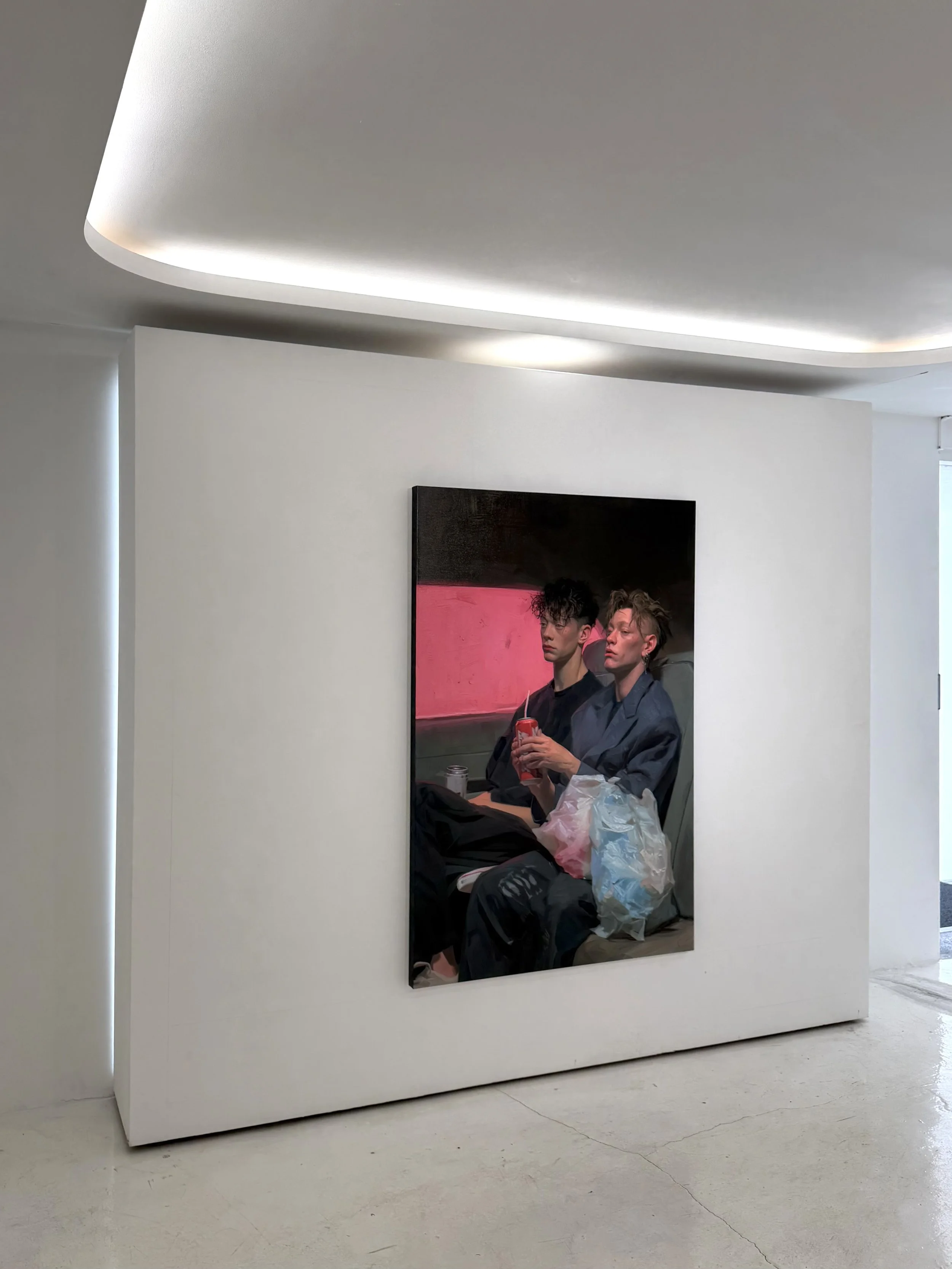
Installation View — 2026 Invitational Solo Exhibition, Gallery We / Hana Choi
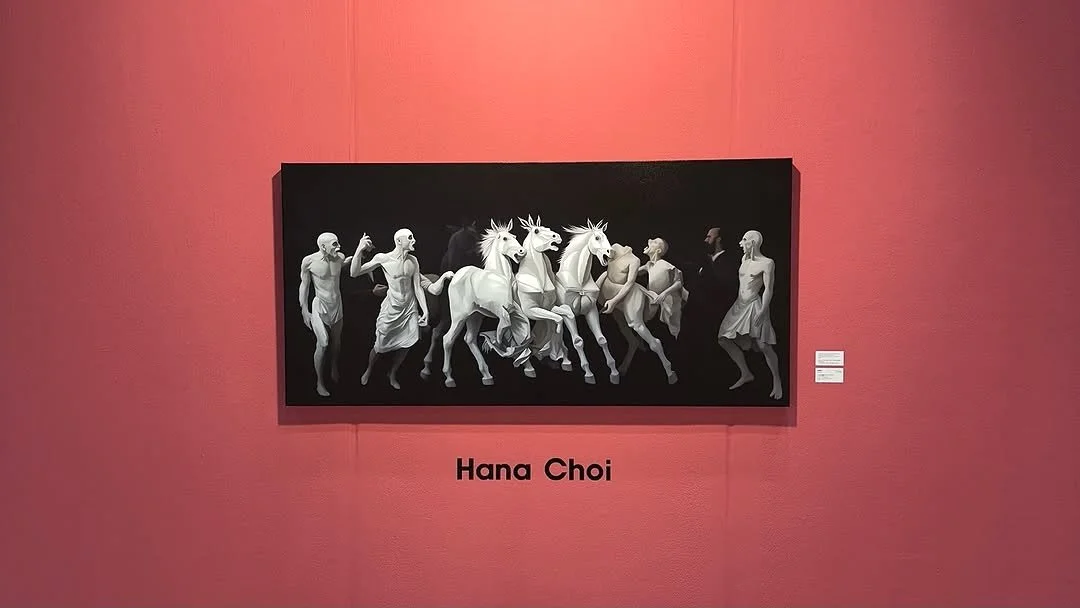
Installation View — 2025 URBAN BREAK Open Call Selected Exhibition / Hana Choi